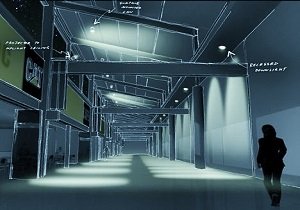
LED — economy and ecology
LED — economy and ecology
Reliability and long service life
LED luminaires achieve a maintenance-free operating life of up to 50,000 hours. Their luminous efficacy and reliability remain essentially constant.
High luminous efficacy thanks to minimal energy consumption
Users of LED technology can count on lower electricity bills.
Compared with luminaires fitted with conventional light sources, LED luminaires produce more light with lower power consumption, without compromising performance or reliability.
Environmental certification and pioneering development
Environmental compatibility is another important advantage of LED technology. Dwindling natural resources and rising electricity prices are prompting all of us to look for ways of reducing energy consumption.
Modern LED lighting systems help improve the ecological balance and significantly reduce carbon dioxide emissions.
Reputable manufacturers such as OSRAM pay attention from the design and production stage onwards to minimising the use of raw materials, most of which they also source locally. This helps to minimise the carbon footprint, reduce waste and make an important contribution to protecting the environment — right from the start. Disposal of the luminaires is simple and safe, as they contain no hazardous substances such as lead or mercury.
Since the enormous potential of LED technology is far from exhausted, the technology will continue to develop in the future, and can genuinely be regarded as “the light of the future” from both an economic and an environmental point of view.
#lightingtechnology #lightingmodernisation #lightingdesign #LED #halllighting #industriallighting #economy #energyefficiency #environment