How can we disinfect with light? (part 1)
In the wake of the SARS-CoV-2 pandemic, disinfection methods are receiving far more attention.
Many people may not even have heard of it, but light also has a disinfecting effect. And no, we do not mean the — to put it politely — questionable notion that “if we go out into the sun, the virus will die in the heat”…
We mean UV-C radiation, which forms part of the spectrum of natural light and which, applied correctly, can be used safely and very effectively for disinfection: this short-wave ultraviolet radiation at a wavelength of 253.7 nm destroys the DNA of pathogens, preventing them from causing further infection.
The low-pressure mercury lamps generally used to produce UV-C emit short-wave ultraviolet C radiation (UV-C; 100–280 nanometres [nm]), primarily at a wavelength of 254 nm.
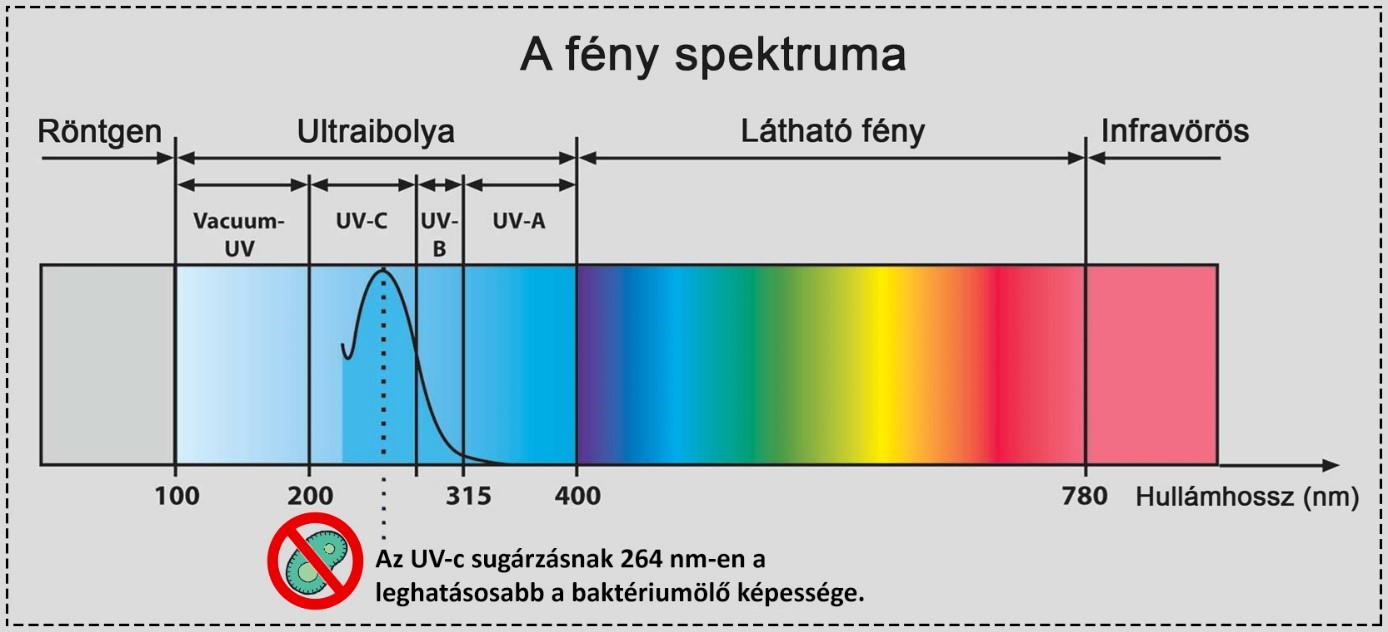
The most important effect of UV-C radiation for disinfection purposes is its bactericidal (germicidal) action:
This is the property whereby the bacteria, viruses, spores and fungi exposed to the radiation are destroyed by the energy they absorb. The dose required to destroy different types of bacteria and germs can vary considerably. It can be used to good effect to reduce the germ count in the air of spaces such as medical waiting rooms.
Calculating the effect of germicidal UV-C radiation, and its benefits:
Germicidal ultraviolet (UV-C) technology is a chemical-free method of disinfecting water, air and surfaces. No additives of any kind are needed, which makes the method simple and inexpensive and keeps maintenance to a minimum.
The dose is calculated from time and intensity.
(s) = exposure time
(mW*s/cm²) = radiation intensity
UV-C dose (mWs/cm²) = intensity (mW/cm²) × time (s)
The calculation can also be done differently, giving the area to be disinfected in m2 or m3.
Take a 36 W T8 germicidal UV-C open-emitting luminaire as an example. It can disinfect 15–20 m2 and its recommended mounting height is between 2.5 and 4 m. For an area of that size, the following disinfection/operating times are recommended with this tube:
<10 m2 - 30 minutes
10–15 m2 - 45 minutes
15–20 m2 - 60 minutes
>20 m2 - more than one germicidal luminaire is required
If the space to be disinfected is given in m3 (again with the 36 W T8 germicidal UV-C luminaire), the following disinfection/operating times apply: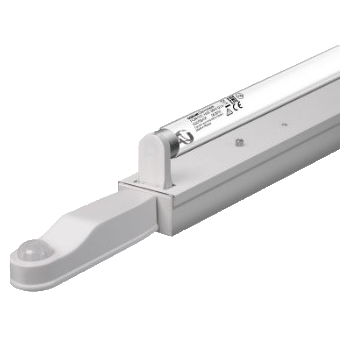
30 m3, 30 minutes - 1 germicidal luminaire
60 m3, 60 minutes - 1 germicidal luminaire
60 m3, 30 minutes - 2 germicidal luminaires
Achieving a high disinfection rate.
Simple micro-organisms such as viruses and bacteria are highly sensitive to UV-C radiation, whereas destroying fungi and spores requires more energy. With the right type and number of UV-C germicidal light sources, a disinfection rate of up to 99.99% can be achieved.
Other effects of UV-C radiation:
Ozone generation:
UV-C radiation converts oxygen in the air into ozone. Here we are talking mainly about radiation below 200 nm, with the maximum effect occurring at 185 nm. Above a certain concentration ozone is itself toxic, but in low concentrations it breaks down fatty acids, which is why it is used in household deodorising appliances, for example.
Erythema:
On exposed human skin, UV-C radiation causes reddening to a degree that depends on skin type, becoming noticeable five to eight hours after exposure.
Applications of UV-C radiation:
Air purification:
Purification with UV-C radiation is an effective way of cleaning air contaminated with biological pollutants such as bacteria, viruses and fungal spores. This is why germicidal UV-C lamps are installed in ventilation ducts, purifying the air that passes them. A further advantage is that UV-C air purification is far more economical and effective than other air filtering and cleaning methods.
UV air purification can be used in:
- hospitals
- consulting rooms
- room cleaning
- offices with or without air conditioning
- vehicles (in air filtration equipment, for example)
- warehouses
- food processing
- rooms with frequent public access
- animal housing
Water treatment:
Water has to be cleared of pathogenic micro-organisms to make it fit for human consumption. UV-C radiation is used for this because it destroys the DNA structure of micro-organisms, either killing them outright or rendering them incapable of reproducing and therefore harmless. Since treatment with UV-C radiation is a physical disinfection method involving no harmful chemicals, it causes no secondary contamination. This also means that neither the water nor the by-products of treatment have any unpleasant smell.
UV water treatment can be used in:
- private households
- water dispensers
- municipal waterworks
- mobile stations (camping, outdoor activities and so on)
- ultrapure water production systems
- ponds and aquariums
- fish farms
- food processing
- wastewater systems
Surface disinfection:
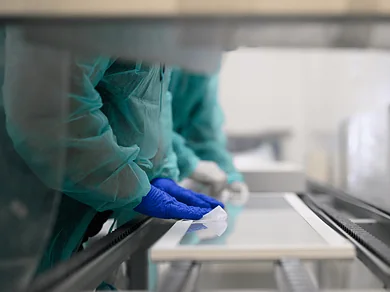
In pharmaceutical and food packaging, in the sterile areas of hospitals, and when cleaning the surfaces of equipment and instruments, the objects to be disinfected are exposed to direct UV-C radiation.
UV-C surface disinfection can be used in:
- hospitals and the disinfection of other sterile zones
- healthcare protection
- the food and pharmaceutical industries
Important information on the use of germicidal lamps:
- The radiation from germicidal lamps is harmful to the eyes and skin. Germicidal lamps may only be used in suitable equipment and in enclosed rooms where nobody is present during operation.
- When using UV-C lamps, official guidance and current industrial safety directives must be observed.
- The recommended operating time must not be exceeded. The maximum permissible exposure time (MPET) can be determined for a given wavelength range.
- Germicidal lamps emit UV-C radiation that is harmful to living organisms, and MUST NOT BE USED FOR GENERAL LIGHTING. Doing so is dangerous and causes irreversible damage to the human body.
- The chemical effect of UV-C on materials that are not UV-resistant causes what is known as ageing, which damages the chemical structure of the materials over the longer term. On plastics, insulation and rubber seals — and on their surfaces or painted finishes — ageing and discoloration become apparent after a prolonged period, and they lose their original condition and quality.
Recommended primarily for disinfecting rooms in healthcare institutions. Because of the hazards described above, it is not recommended for use at home.
In the second part of our article we will show how UV-C technology is applied in practice, through concrete examples.
#lightingtechnology #lightingmodernisation #lightingdesign #disinfection
If UV-C technology and germicidal disinfection luminaires have caught your interest, do get in touch and we will be glad to help.