Lighting requirements for football pitches (2019-11-21)
The rules governing the lighting of football pitches — and with them the standards — have over time…
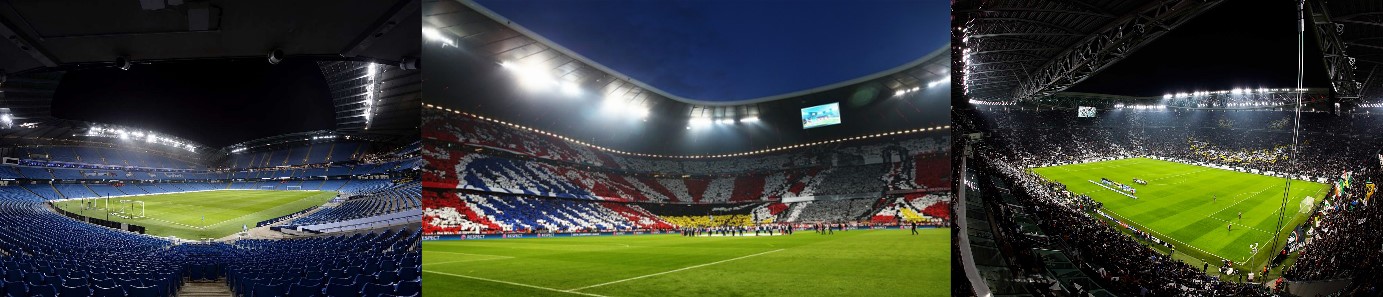
have become steadily more thorough and more precise. This development owes a great deal to the arrival of LED technology, without which sports facilities are now unthinkable. In 2018 the one sporting event that enjoyed the undivided attention of the international media was the FIFA World Cup, which from 14 June to 15 July kept a significant part of the world's population glued to their television screens. It is fair to say that football has become the world's number one sport. Following this trend, building football pitches has also become increasingly popular, and demand has grown considerably in recent years. The guidelines relating to football pitch lighting and its classification are therefore extremely important.
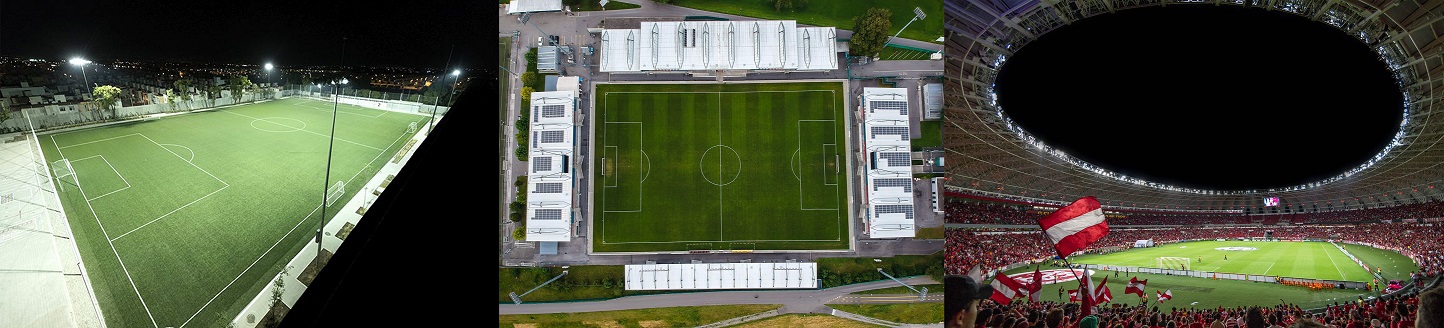
How do FIFA and UEFA classify the standards and requirements for football pitch lighting?
Both football associations divide facilities and their lighting into three categories:
- first, amateur-level football pitch lighting,
- second, semi-professional football pitch lighting,
- and third, the lighting of stadiums and pitches hosting professional-level matches.
The essential differences between these three categories are:
- the level of illuminance,
- the uniformity of the illuminance,
- and whether the event is televised.
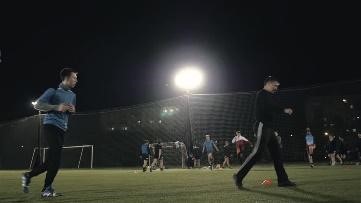 Class I — under FIFA and UEFA guidelines, Class I is the lowest class in lighting terms, serving training sessions and recreational purposes. For such purposes a horizontal illuminance (Eh) of 200 lx (lux) coupled with a spatial uniformity of 0.5 is sufficient.
Class II — a higher class in lighting terms, whose guidelines are applied by a good many second- and third-tier national leagues and clubs. Here the standard of lighting required by the associations rises as well: roughly 500 lux horizontal illuminance with a uniformity of 0.6. Clubs often skip this level, since everyone aspires to the leagues above, so it makes sense to specify the lighting accordingly from the outset.
Class III — stadiums in Class III serve the lighting needs of teams competing in the national professional championship: roughly 750 lux horizontal illuminance with a uniformity of 0.7. Whereas Class I and Class II stadiums are not equipped for television broadcasting, the lighting solutions for Class III playing areas have to take current broadcasting trends into account — which today means 4K resolution — although in Class III matches are typically recorded with only one or two cameras.
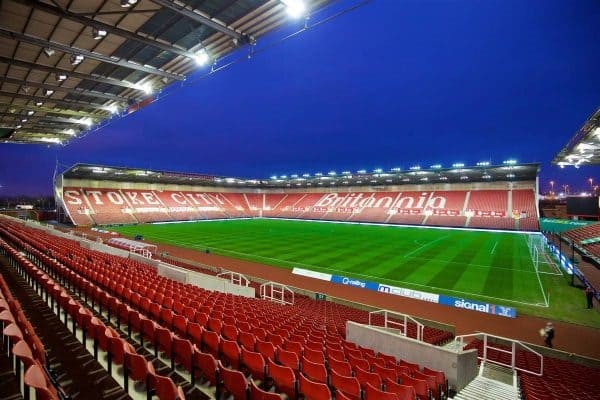 Beyond these there are also professional stadiums, facilities built specifically to host national and international matches of major significance. For television broadcasts of national championships the horizontal illuminance requirement is 1000 lx, while for international events it is 1500 lx, and the uniformity requirement rises from 0.6 to 0.8. Here the media crews work with nearly 30 high-resolution fixed-position cameras to capture every moment of the match for viewers. These stadiums therefore have to be equipped with high-quality (CRI 90) high-output LED floodlights in order to meet FIFA's and UEFA's most demanding requirements for sports pitch lighting.
The number of masts
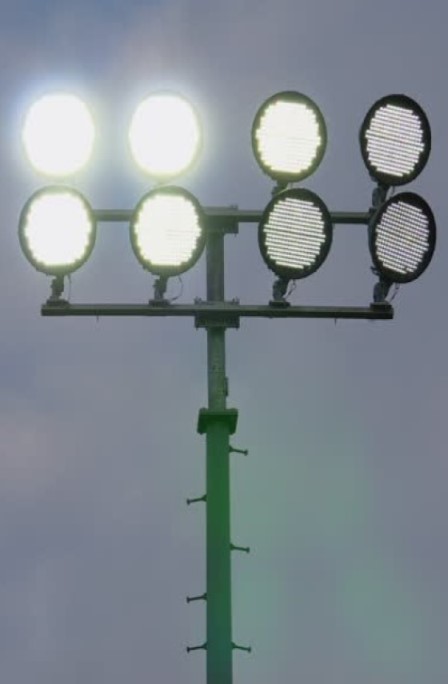 When mounting floodlights on masts, both amateur and professional stadiums have to meet a number of guidelines that determine the permissible number, height and arrangement of the masts. As we saw in the FIFA and UEFA requirements set out above, in designing sports pitch lighting we have to keep to the prescribed illuminance and uniformity values, and it is also important that the luminaires should not dazzle either the players or the spectators. Reconciling all these parameters is no small task. If we want strong illuminance, for example, the luminaires should be mounted as low as possible — but then we cannot light across the whole pitch, which harms uniformity; and the closer high-output luminaires come to spectators and players, the more they dazzle. To avoid situations like this, FIFA and UEFA make a number of recommendations on mast arrangement, as follows:
1. Masts at the four corners 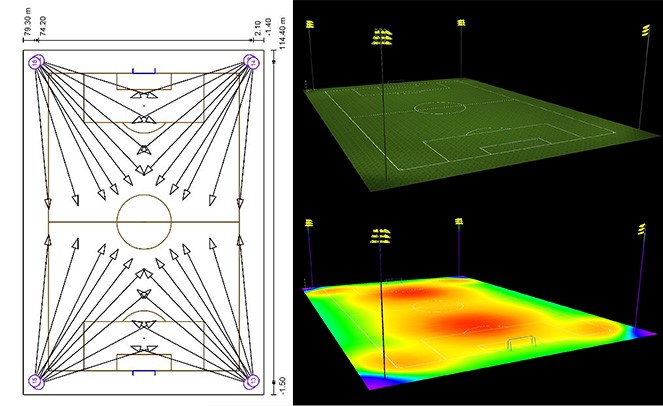
As the name suggests, the floodlights are mounted on masts placed at the four corners of the pitch. The beams converge from the four corners towards the centre of the pitch. In this case, for professional stadium lighting the masts must be as tall as possible, so that there is enough room for the light to travel effectively to the centre of the pitch.
Advantage: this arrangement deals effectively with glare while providing good illuminance and uniformity.
Disadvantage: if the masts are too low, the beams do not reach the centre of the pitch, and uniformity suffers as a result. In Class III stadiums, masts of nearly 30 metres are needed because of the high illuminance requirement.
2. Four masts along the sides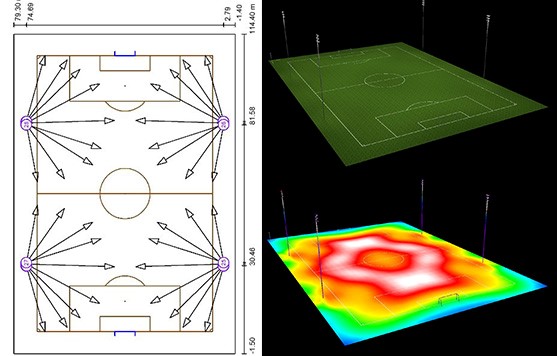
In this arrangement the masts stand halfway between the goal line and the halfway line. This is the most widespread arrangement for football pitch lighting when building pitches to FIFA and UEFA lighting requirements. Here the beams leaving the floodlights on the masts light the pitch from around its perimeter.
Advantage: standard-compliant lighting can be achieved with shorter masts than in the four-corner arrangement.
Disadvantage: it is harder to achieve adequate uniformity, and darker areas form more easily at the corner points.
3. Six- or eight-mast arrangement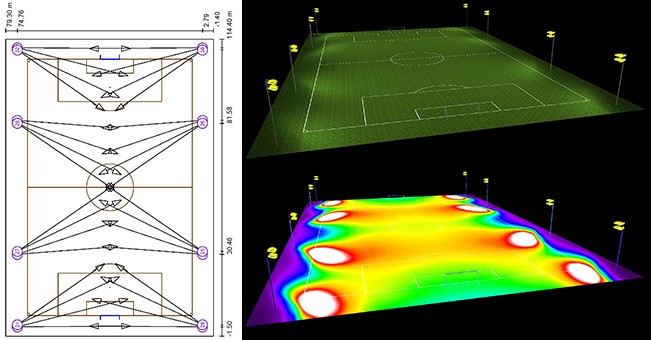
In rare cases a six- or eight-mast arrangement is used to light football pitches. This typically happens where other sports are also practised on the site — running on the track built around the pitch, for example.
Advantage: masts of 8–12 metres are generally sufficient for training pitches. Using more masts improves uniformity.
Disadvantage: the capital cost is likely to be higher because more masts have to be installed.
Every factor has to be weighed carefully to produce a good project that complies with FIFA's and UEFA's football pitch lighting standards and requirements. If we have caught your interest and can help you with sports pitch lighting, football pitch lighting or other sports lighting, please do get in touch: CONTACT
#lightingtechnology #lightingmodernisation #lightingdesign #footballpitchlighting #LED