Simon Brammer, head of urban development, on his personal view of LED (2019-10-01)
“I use 100% LED light sources… I'm a bit obsessive about it! It took me quite a few years of research…”
We discussed this subject with Simon Brammer, head of the cities programme at the UK's Ashden Foundation, as part of the 10:10 campaign group.
What light sources do you use at home?
Many people are still wary of this relatively new technology. Personally I use 100% LED light sources — even the light in my fridge is LED. Not everyone has to be this much of an “LED-ocrat” — I'm a bit obsessive! It took me quite a few years of research to find the best lighting solutions.
The most important lesson for me was about the “temperature” of light. We measure it in kelvin (you will find this information on the packaging of any light bulb or LED). I like warm white light with LEDs too — the kind old-fashioned tungsten bulbs gave off. That is about 2700 kelvin (K).
Interestingly, people living in colder climates tend to prefer warm, yellowish light, while those in warmer climates prefer cooler, whiter or bluer light. I now know which colour I like, and I generally find the right LED light source every time.
A decisive reason for my switching to LED light sources is that I have roof-mounted solar panels, which help meet my house's electricity consumption during the day. When I bought a real-time energy meter, however, I quickly noticed that I was using a huge amount of electricity at night — when the panels are no help. A little detective work showed that it was my lighting consuming all that power. The electricity bill for my three-bedroom house has now come down to £7 a month, and lighting modernisation — essentially LED technology — is the means. Of course this works exactly the same way without a solar system. Any light source can easily be swapped for an LED.
Can LED light sources and halogen bulbs coexist?
That is, can I replace the bulbs on the same circuit (a four-bulb kitchen light, say) as they burn out, or do I have to change all four at once?
I assume we are talking about reflector-type light sources here.
Well, it depends on whether the light sources are low voltage or mains voltage. This is easy to establish, since low-voltage bulbs connect with “pins”, for example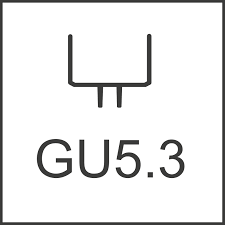 or G4
or G4 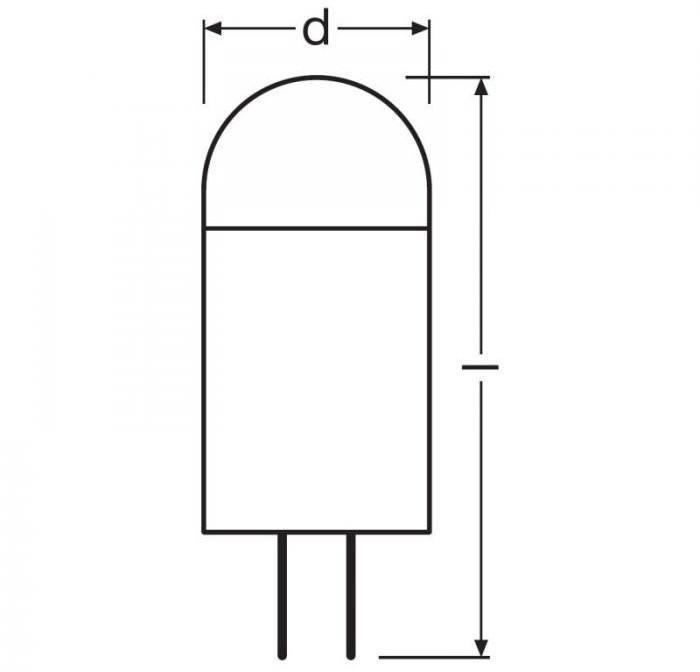 , while mains connectors have “prongs”
 (or an Edison screw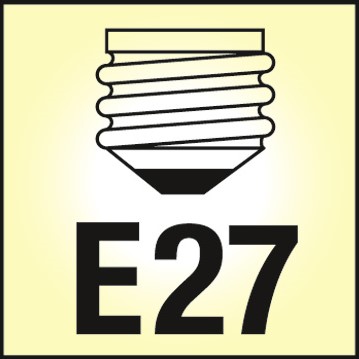
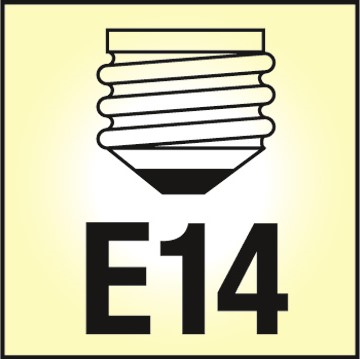 — ed.).
So if the light source has prongs there will be no problem, but my recommendation is to change them all at once. Halogen bulbs use so much electricity for the light they produce — just notice how much heat they give off — that waiting for them to burn out would be a false economy.
If they are low voltage (pin-based), however, things are a little more complicated. These have a transformer, located either in the ceiling or in the fitting itself. Some LED lamps, such as the Philips Master LED range, have built-in circuitry compatible with most (though not all) transformers, so these do not need changing.
In other cases the transformer has to be replaced with an LED driver. This is because transformers deliver far more power than low-consumption LEDs need. You will need an electrician for this.
How have people reacted to your switching to these light sources?
Many had already tried LED lighting by then. Those early light sources were weak, cold in colour and mostly suitable only for decorative purposes. Those negative memories live on in many people, but I always explain that LED technology is developing continuously and rapidly, and that far more LED solutions are now available in lighting modernisation too. I take all sorts of LED light sources into people's homes so they can see the wide range of colours, light outputs, fittings and so on, and try them out before buying. That way they get what they want without making expensive mistakes. It demolishes the old “bad bulb” stereotype, and the people I know have been generally satisfied so far.
Once I have replaced all my old halogens with LED lamps, what should I do with the old bulbs that still work?
Throw them away, or recycle them if you can. Look into where old halogens can be recycled. Please note that compact fluorescent lamps must never go into general waste, as they contain mercury — one more good reason to replace them.
The amount of energy saved by replacing them far outweighs any energy embodied in the manufacture of the old bulbs.
If I have already replaced my halogens with compact fluorescents, is it worth changing those for LED versions? I know LEDs switch on instantly, but that does not seem like a big energy saving. Is it better to replace compact fluorescents only when they burn out?
There is still some energy saving, since LED lamps use less energy than compact fluorescents. You are right, though, that the difference is nowhere near as significant as replacing old-fashioned conventional bulbs. (You can test this here too: calculator —ed.)
If you are happy with the light there is no need, but if you do replace them, go LED. A good quality non-dimmable LED can be bought for a little under £4. Bear in mind, though, that you get what you pay for: with a few exceptions, very cheap LED light sources will not perform well or last.
Their other advantage, as you mentioned earlier, is that they come on instantly — LEDs need no warm-up time to reach full brightness.
Do LED lamps work properly with dimmer switches?
Yes — dimmable LED lamps are very reliable, but there are a few things worth bearing in mind.
You may need to change your dimmer switch for a “modern” or LED-compatible one. This is because they handle far lower loads. If you replace the bulbs in a 4 × 60 W chandelier with LEDs, for example, the 240 W load drops to around 30 W.
Some LED light sources have built-in circuitry for handling dimmers, some do not. The best way to find out is to install them: if the lamp does not dim properly or flickers, you will need to change the dimmer. These are no more expensive than “ordinary” dimmer switches.
My kitchen and living room have dimmable lighting that works perfectly. When buying a light source, though, check that the dimmable logo is on the box and look for the “dimmable” symbol.  or
or 
Retrofit LED light sources are excellent — the moment you switch the light on you get a pleasant warm light. But I have also had LED lamps last only months, or even weeks, contrary to the life advertised on the box. So a few questions come to mind:
1. How can we tell whether an LED light source will last to the end of its stated life?
2. Can the quality of the household electricity supply (consistency, voltage and so on) affect the life of an LED light source?
3. Is there anything we can do to the home lighting circuit that helps extend the life of an LED light source?
In my experience, if you buy a quality product it will last to the end of its stated life.
Some of my LED lamps are more than five years old and still going strong. If light sources burn out regularly there may be some other problem — a broken connection in the lampholders, a faulty connection to the switches, a bulb overheating in a small, enclosed space and so on. If it happens elsewhere in your home as well, it may be a general problem; if it occurs in only one room, the fault is local. In either case it is worth asking an electrician to take a look.
Although “voltage optimisation” has energy efficiency benefits (it reduces the voltage in the house to around 220 V, at which almost every appliance operates, thereby saving money), I would recommend finding out what is actually causing the problem, since these systems are expensive and there is no guarantee that installing one will solve it.
Are LED light sources cheaper than energy-saving bulbs?
Not yet as cheap as energy-saving bulbs, but they are getting close.
When thinking about what a light source costs, it is worth considering the running costs too. Suppose, for example, that there are four spotlights in the kitchen: the running cost is £80 a year, whereas with LED lamps it is £7 a year. Working out the “payback” period matters as well. Buying cheap, energy-inefficient bulbs may be tempting, but in the long run it does not pay. (You can calculate it here: calculator — ed.)
There is nothing at all wrong with using modern energy-saving bulbs (they are improving continuously too), if that is what the budget allows.
What should we replace our 60 W and 100 W conventional bulbs with — what do you recommend, and what should we watch out for?
Right, first of all: if you want warm light, choose something with a kelvin figure of 3000 or below. Any light source with a higher kelvin figure will emit cooler light.
Then choose the light output you want. As a general rule, most people know that a 100 W bulb is bright and suitable for central lighting, a 60 W bulb is good for a table lamp, and a 25 W bulb suits a place where you want soft, gentle light. LED lamps consume roughly 10% of the energy of conventional bulbs — so a 10 W LED light source gives you the equivalent of an old 100 W bulb, a 6 W the equivalent of a 60 W bulb, and so on.
Is it possible to replace GU10 halogen bulbs (with two thin prongs on the back) with LED lamps without throwing out the whole system?
Yes, that is now possible. The GU10 designation means the cap has two poles, that is two prongs, and the number indicates the distance between them — 10 mm in our case. 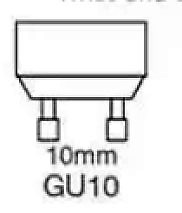
So the solution lies in finding an LED light source that meets this specification.
I had a quick look online and I can see that they are available, as more and more LED lamps are being introduced. Remember that these are generally low-voltage light sources, so you need to make sure they are compatible with your system.
In summary, what does the process of an LED lighting upgrade look like?
Where do we start?
It may seem obvious, but the best starting point is to identify the brightest light sources and replace those. That maximises your saving.
How much light do you need?
Light is measured in lumens (lm), but that is too complicated to check every time you buy a light source. Broadly speaking, an “old-style, conventional” 100 W bulb is equivalent to a 10 W LED lamp, 60 W to 6 W, and 40 W to 4 W. Mathematicians will recognise a rough 10% rule. For spotlights, replace a 50 W GU10 with an LED light source of around 4 W.
Which colour should you choose?
Colour temperature is measured in kelvin (K). The lower the figure, the warmer the light. As I like warm light, I prefer 2700 K. That is like the light of an old-fashioned bulb. 3000 K is less warm, and the higher you go the cooler and whiter the light becomes — anything approaching 5000 K will be almost blue. These are sometimes called “warm white” and “cool white”. So, depending on what you want, check the packaging to be sure you have chosen the right colour.
Do you want to dim your lighting?
You will pay a little more for dimmable light sources, but in return you can control the brightness of your lamps. Look for the “dimmable” symbol on the packaging. or
Just note that because LED lamps use very little energy, you may also need to change your dimmer switch (ask a qualified electrician to do this).
Have you got the right fit?
Different lamps in your home will have different fittings, so make sure the products you buy will fit them. The best way is to take the old bulb with you. If you are replacing downlights or spotlights, take out the old light sources (cold and switched off) and look at whether they have “prongs” or “pins”. If they have prongs they are mains voltage (GU10 fitting) and changing them is no problem. If they have pins (this is low-voltage lighting), things are a little more complicated. You may need to ask a specialist which light source will work in your home.
Finally, when changing your lighting, approach it like repainting a room, where you first buy a tester pot to see whether you like the colour before painting the whole room. When investing in new LED light sources, buy just one first to see whether you like it before replacing the rest. Remember that most places will exchange lamps if the product you bought is not right for you.
Once you have changed the lamps you can sit back (you will not have to think about them — on average they will last ten years) and enjoy their glow.
#lightingtechnology #lightingmodernisation #lightingdesign #LED #lightsource